Womanwise 19
19/04/10 20:40 Filed in: Technique
This was
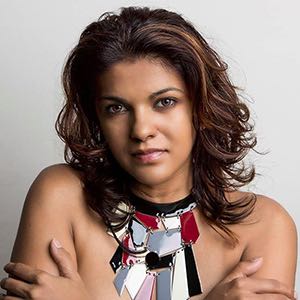
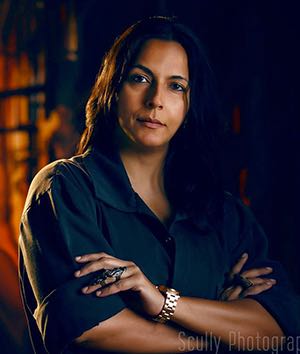
my second opportunity to photograph Kenisha Thom. The first came
when I was in Tobago recording last year’s Great Fete Weekend and
The Bridge publisher Chenier Belgrave asked me to schedule a
session with Kenisha and her family.
I should note that I’d packed strategically for Great Fete, working with gear and backup gear built around using an extended strobe that I’d be waving around on what might technically be described as a “stick” actually the top two extensions of an old PIC lightstand to model light in an event that might technically be described as “wildness.”
So that’s what I had for the shoot, along with a small light modifier I’d packed as a nervous afterthought.
Those photos turned out pretty well, in spite of the fact that after posing Kenisha and her family artfully on a neighbour’s hammock, attractively slung between two trees with really radiant light spilling all around it, the whole thing collapsed, mercifully harming nothing but my reputation.
For this return engagement, Kenisha politely but unequivocally declined any notion of showing the scars from the brutal attack she suffered in Tobago, which was to be the subject of the story.
The photo opportunity would take place at her Santa Margarita home, so I packed gear to take advantage of what I hoped might be attractive exteriors.
The housing project wasn’t finished and punishing heat and dry weather conditions had turned the struggling lawns a quite distinctive shade of brown. The sunset, which I planned to shoot into, also joined in, offering an image shattering background in shades of dull gray.
I pressed into service the new Cactus radio triggers that I’d bought to fill in a small but notable gap in my location shooting capabilities.
I use radio slaves in the studio and on commercial shoots, but neither of these solutions work with the kit I use for my personal work, a pair of Canon strobes. Much of the work I do with this gear is handily accomplished using Canon’s STE2 infrared trigger, which supports ETTL control of the two strobes, but a light based triggering solution is utterly stymied by even moderately bright outdoors light and distances beyond 16 feet or so and any position that loses line of sight with the trigger.
Not a problem indoors, where the infrared signal can bounce around a bit, but outdoors, getting that synchronisation can be a bit like threading a needle with wicketkeeper’s gloves on.
I don’t do enough small strobe work outdoors to justify the pricier and, it’s said, more reliable units, and the Cactus triggers, which I sourced from Cowboy Studio, seem to offer terrific value for the price.
The strobes trigger in manual mode, and do so reliably in my experience so far.
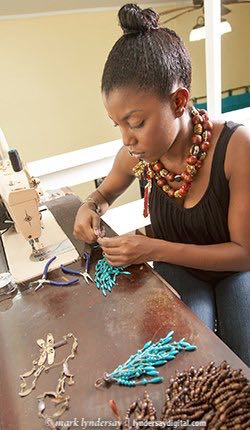
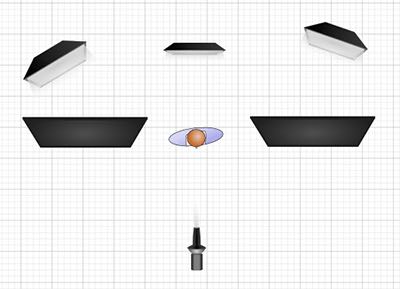
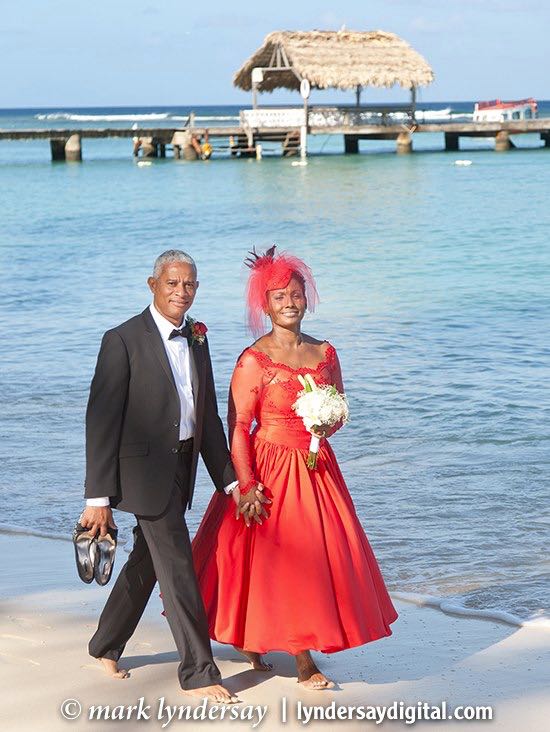
The full length shoot of Kenisha Thom was done on a neighbour’s lawn with two strobes staggered in height from the left. The upper strobe is at just over quarter power, the lower one, meant to light but also to taper off the former model’s tall frame was set at just under quarter power.
Both strobes had CTO warming gels and Lumiquest light modifiers in place and I shot from roughly thirty feet away from the subject on the long end of a 70-200mm zoom.
The closeup photo used on the cover reduced the lower light a bit more and angled it upward to balance the overhead light for a classic beauty light effect.
On reviewing the images, I really should have gone in the opposite direction with the warming gels and shifted the colour balance of the strobes down into a cooler blue to match the dull glow of a disappointing sunset, then an overall colour correction would have warmed up both subject and background.
Still, with a sparkling, sculpted beauty like Kenisha before the lens, there’s a limit to the damage my spot misjudgements could do to a photo of a two time beauty contestant.
I should note that I’d packed strategically for Great Fete, working with gear and backup gear built around using an extended strobe that I’d be waving around on what might technically be described as a “stick” actually the top two extensions of an old PIC lightstand to model light in an event that might technically be described as “wildness.”
So that’s what I had for the shoot, along with a small light modifier I’d packed as a nervous afterthought.
Those photos turned out pretty well, in spite of the fact that after posing Kenisha and her family artfully on a neighbour’s hammock, attractively slung between two trees with really radiant light spilling all around it, the whole thing collapsed, mercifully harming nothing but my reputation.
For this return engagement, Kenisha politely but unequivocally declined any notion of showing the scars from the brutal attack she suffered in Tobago, which was to be the subject of the story.
The photo opportunity would take place at her Santa Margarita home, so I packed gear to take advantage of what I hoped might be attractive exteriors.
The housing project wasn’t finished and punishing heat and dry weather conditions had turned the struggling lawns a quite distinctive shade of brown. The sunset, which I planned to shoot into, also joined in, offering an image shattering background in shades of dull gray.
I pressed into service the new Cactus radio triggers that I’d bought to fill in a small but notable gap in my location shooting capabilities.
I use radio slaves in the studio and on commercial shoots, but neither of these solutions work with the kit I use for my personal work, a pair of Canon strobes. Much of the work I do with this gear is handily accomplished using Canon’s STE2 infrared trigger, which supports ETTL control of the two strobes, but a light based triggering solution is utterly stymied by even moderately bright outdoors light and distances beyond 16 feet or so and any position that loses line of sight with the trigger.
Not a problem indoors, where the infrared signal can bounce around a bit, but outdoors, getting that synchronisation can be a bit like threading a needle with wicketkeeper’s gloves on.
I don’t do enough small strobe work outdoors to justify the pricier and, it’s said, more reliable units, and the Cactus triggers, which I sourced from Cowboy Studio, seem to offer terrific value for the price.
The strobes trigger in manual mode, and do so reliably in my experience so far.
The full length shoot of Kenisha Thom was done on a neighbour’s lawn with two strobes staggered in height from the left. The upper strobe is at just over quarter power, the lower one, meant to light but also to taper off the former model’s tall frame was set at just under quarter power.
Both strobes had CTO warming gels and Lumiquest light modifiers in place and I shot from roughly thirty feet away from the subject on the long end of a 70-200mm zoom.
The closeup photo used on the cover reduced the lower light a bit more and angled it upward to balance the overhead light for a classic beauty light effect.
On reviewing the images, I really should have gone in the opposite direction with the warming gels and shifted the colour balance of the strobes down into a cooler blue to match the dull glow of a disappointing sunset, then an overall colour correction would have warmed up both subject and background.
Still, with a sparkling, sculpted beauty like Kenisha before the lens, there’s a limit to the damage my spot misjudgements could do to a photo of a two time beauty contestant.
0 Comments
Young photographers lament younger photographers
12/04/10 19:25 Filed in: Opinion
This is the text from the original Facebook
posting that led to this BitDepth
column.
The New York Times article is here...
Facebook users can find the thread here...
David Wears: I love ur sub-title. "Amateur photographers, happy to accept small checks for snapshots, are underpricing professionals". That is what is killing photographers in T&T today.
Tue at 1:03pm
Antony Scully: I tend to disagree. What's killing some photographers in T&T is the closed-minded mentality of keeping to themselves, for fear of the next guy learning something from them and taking "their" clients. This attitude has fostered mediocrity, and stifled the room for improvement. This has made it quite easy for amateurs to shoot a few frames, start up " [insert your name here] Photography" and subsequently undercut the professionals.
Tue at 9:14pm
Mark Gellineau: Anthony has hit the nail square on the head with that comment. What that article describes hasn't really made an impact on our photography market due to its size and monopoly style setup.
Tue at 10:34pm
Mark Lyndersay: Um, monopoly style? Closed-minded mentality? Who are you fellows talking about? In my time, I've known dozens of photographers working in Trinidad and Tobago and one thing has remained the same.
The photographers who don't share their knowledge pretty much have two tricks and can't afford to share one, the people I've learned from knew so much that they could talk for weeks and never truly get started on their well spring of knowledge.
There's been underpricing, cockiness, arrogance and informed ignorance throughout my relations with photographers in T&T over the last thirty years, but I've always respected the time that people like Gary Chan, Noel Norton and Harold Prieto gave me when I thought I knew it all and they showed me by example just how much I didn't know at all.
I don't think it's necessary to run around in packs to share and no great photographer has ever truly been my competition, unskilled, obnoxious photographers have done more to make my life complicated than any pro it's ever been my pleasure to bid against on a job.
With the ease of access to information about how professional photography is done in this Internet enabled world, I'm not even sure that anything, beyond laziness or a lack of craft can stifle improvement.
This is a glorious, almost unprecedented time for photography. Access is easy, information is abundant and the cost of experimentation is as low as it's ever going to get. I find it rejuvenating, exciting and something of a blessing to be able to work in an era that brings so much possibility out of so many people who might not otherwise have had a chance to express themselves.
Ultimately, photography is work, creative, often amusing and sometimes startlingly exciting work, but work nonetheless and just like it did in the late 70's and early 80's, the people who stick with the effort required will be those who really want to be photographers.
Tue at 10:57pm ·
Mark Gellineau: Well I feel schooled as usual in your wake Big Mark and I concur however I feel there is some relevancy to what was said prior. The times have changed and there are certainly less worthy veterans who take the time to impart their wisdom to the next crop of whippersnappers. There is also a new found explosive saturation of guys with cameras that the internet arms but doesn't guide.
Yesterday at 12:27am
Kibwe Brathwaite: Great comments from everyone and although I fully agree and appreciate Lyndersay’s contribution, I also agree with Gellineau; times have changed and there is a different breed of individuals today. Some are quite established, some think they are established, many of them with unnecessarily inflated egos.
But back to the issue in the article. I guess the technology is changing the industry. Honestly, I don’t mind if a wedding planner or a performing artist blanks me and chooses a $200 photographer, once they understand that in many cases, you will get $200 worth in quality. And that’s another major issue. Customers are, in most cases, not very informed to differentiate between work that has considerable technical and creative merit, from one that is.... well... not (insert any snap-an-ah-pong-ah-one-click-photoshop-filter-photographer’s name here).
Mark Lyndersay: Oh you young people. I'm sure this must all be very confusing to you, but no, there isn't a different breed of individuals today.
I've seen exactly this sort of thing happen twice before. The first time was in the late 70's and early 80's, not coincidentally, when I began taking photographs, there was a massive upsurge in photography related magazines (information access) and a huge reduction in prices on darkroom equipment and cameras (technology) that made is much easier for a complete amateur to shoot and process photographs just like folks with labs and cameras that cost thousands of 1970's dollars.
I bought quite a bit of the equipment I still use from the local photographers who bought into this idea.
In the early 1990's, computers became absurdly cheap compared to the cost just a few years before and software became a commodity. The first product to achieve mainstream status as a widely pirated product was Pagemaker. It was fairly easy to use, much more powerful than Wordperfect and encouraged casual users to do anything they wished with a blank page.
In both cases, something happened over the ensuing years. Ready access to new technology and enthusiastic use brought home to people just how much work photography and later design really was. Their stumbling efforts to make good work taught them a little about a craft they had previously taken for granted, increasing the general understanding and appreciation of both photography and print design.
There were more professionals in the market after both surges in interest and both markets benefited from the increased awareness. Contemporary photography was increasingly recognised as an artform and design became much more adventurous than it ever had been. Typography, for instance, has never been the same since Fontographer appeared.
The thing is, good photography is hard work. Yes, the clever filtery stuff is much easier to do than it ever was, but that really just makes it the equivalent of the old "ransom note" graphics created by users who didn't really understand what fonts were for and how they should be used.
I've met everybody you've described and many, many more, not just once, but twice and I have to fall back on the wisdom of my elder, Noel Norton, who showed me by example that the answer to the madness of fads is to pick a path, preferably one that the crowds aren't all following, and work steadily at it.
I've always been grateful to Norts for that advice and I'm happy to pass it along. Shoulders to the wheel fellas.
The New York Times article is here...
Facebook users can find the thread here...
David Wears: I love ur sub-title. "Amateur photographers, happy to accept small checks for snapshots, are underpricing professionals". That is what is killing photographers in T&T today.
Tue at 1:03pm
Antony Scully: I tend to disagree. What's killing some photographers in T&T is the closed-minded mentality of keeping to themselves, for fear of the next guy learning something from them and taking "their" clients. This attitude has fostered mediocrity, and stifled the room for improvement. This has made it quite easy for amateurs to shoot a few frames, start up " [insert your name here] Photography" and subsequently undercut the professionals.
Tue at 9:14pm
Mark Gellineau: Anthony has hit the nail square on the head with that comment. What that article describes hasn't really made an impact on our photography market due to its size and monopoly style setup.
Tue at 10:34pm
Mark Lyndersay: Um, monopoly style? Closed-minded mentality? Who are you fellows talking about? In my time, I've known dozens of photographers working in Trinidad and Tobago and one thing has remained the same.
The photographers who don't share their knowledge pretty much have two tricks and can't afford to share one, the people I've learned from knew so much that they could talk for weeks and never truly get started on their well spring of knowledge.
There's been underpricing, cockiness, arrogance and informed ignorance throughout my relations with photographers in T&T over the last thirty years, but I've always respected the time that people like Gary Chan, Noel Norton and Harold Prieto gave me when I thought I knew it all and they showed me by example just how much I didn't know at all.
I don't think it's necessary to run around in packs to share and no great photographer has ever truly been my competition, unskilled, obnoxious photographers have done more to make my life complicated than any pro it's ever been my pleasure to bid against on a job.
With the ease of access to information about how professional photography is done in this Internet enabled world, I'm not even sure that anything, beyond laziness or a lack of craft can stifle improvement.
This is a glorious, almost unprecedented time for photography. Access is easy, information is abundant and the cost of experimentation is as low as it's ever going to get. I find it rejuvenating, exciting and something of a blessing to be able to work in an era that brings so much possibility out of so many people who might not otherwise have had a chance to express themselves.
Ultimately, photography is work, creative, often amusing and sometimes startlingly exciting work, but work nonetheless and just like it did in the late 70's and early 80's, the people who stick with the effort required will be those who really want to be photographers.
Tue at 10:57pm ·
Mark Gellineau: Well I feel schooled as usual in your wake Big Mark and I concur however I feel there is some relevancy to what was said prior. The times have changed and there are certainly less worthy veterans who take the time to impart their wisdom to the next crop of whippersnappers. There is also a new found explosive saturation of guys with cameras that the internet arms but doesn't guide.
Yesterday at 12:27am
Kibwe Brathwaite: Great comments from everyone and although I fully agree and appreciate Lyndersay’s contribution, I also agree with Gellineau; times have changed and there is a different breed of individuals today. Some are quite established, some think they are established, many of them with unnecessarily inflated egos.
But back to the issue in the article. I guess the technology is changing the industry. Honestly, I don’t mind if a wedding planner or a performing artist blanks me and chooses a $200 photographer, once they understand that in many cases, you will get $200 worth in quality. And that’s another major issue. Customers are, in most cases, not very informed to differentiate between work that has considerable technical and creative merit, from one that is.... well... not (insert any snap-an-ah-pong-ah-one-click-photoshop-filter-photographer’s name here).
Mark Lyndersay: Oh you young people. I'm sure this must all be very confusing to you, but no, there isn't a different breed of individuals today.
I've seen exactly this sort of thing happen twice before. The first time was in the late 70's and early 80's, not coincidentally, when I began taking photographs, there was a massive upsurge in photography related magazines (information access) and a huge reduction in prices on darkroom equipment and cameras (technology) that made is much easier for a complete amateur to shoot and process photographs just like folks with labs and cameras that cost thousands of 1970's dollars.
I bought quite a bit of the equipment I still use from the local photographers who bought into this idea.
In the early 1990's, computers became absurdly cheap compared to the cost just a few years before and software became a commodity. The first product to achieve mainstream status as a widely pirated product was Pagemaker. It was fairly easy to use, much more powerful than Wordperfect and encouraged casual users to do anything they wished with a blank page.
In both cases, something happened over the ensuing years. Ready access to new technology and enthusiastic use brought home to people just how much work photography and later design really was. Their stumbling efforts to make good work taught them a little about a craft they had previously taken for granted, increasing the general understanding and appreciation of both photography and print design.
There were more professionals in the market after both surges in interest and both markets benefited from the increased awareness. Contemporary photography was increasingly recognised as an artform and design became much more adventurous than it ever had been. Typography, for instance, has never been the same since Fontographer appeared.
The thing is, good photography is hard work. Yes, the clever filtery stuff is much easier to do than it ever was, but that really just makes it the equivalent of the old "ransom note" graphics created by users who didn't really understand what fonts were for and how they should be used.
I've met everybody you've described and many, many more, not just once, but twice and I have to fall back on the wisdom of my elder, Noel Norton, who showed me by example that the answer to the madness of fads is to pick a path, preferably one that the crowds aren't all following, and work steadily at it.
I've always been grateful to Norts for that advice and I'm happy to pass it along. Shoulders to the wheel fellas.
Mining and refining photographic history
19/01/10 00:34 Filed in: Technique
Some background notes on a project I began
to restore old negatives shot by my father 50 years ago.
Read More...
Losing rights in photography competitions
16/01/10 22:30 Filed in: Business
Here's an interesting post on just how widespread the rights grab for
competition photos is becoming.
Related...
TIDCO Divali Competition
Related...
TIDCO Divali Competition
Womanwise 18
04/01/10 20:48 Filed in: Technique
Not
strictly a Womanwise shoot, but a intriguing opportunity to meet
and photograph a victim of a heinous crime who refuses to remain
silent. Read More...
Womanwise 17
21/12/09 23:38 Filed in: Technique
Womanwise 16
14/12/09 21:25 Filed in: Technique
Womanwise 15
07/12/09 22:34 Filed in: Technique
Womanwise 14
30/11/09 23:58 Filed in: Technique
Womanwise 13
23/11/09 22:40 Filed in: Technique
Womanwise 12
16/11/09 22:12 Filed in: Technique
Destra Garcia looks great with child.
Another session with a worried subject turns out really
well. Read More...
10 ways to improve your photography without buying gear
09/11/09 23:12 Filed in: Basics
Inspired by writings by Scott Bourne
and David DuChemin, I add my two cents to the conversation on
making better pictures without buying more equipment. Read
More...
Womanwise 11
09/11/09 22:15 Filed in: Technique
A Womanwise shoot goes pear shaped.
How I wrestled a difficult shoot to the ground and why it didn't
matter anyway. Read More...
Womanwise 10
02/11/09 22:23 Filed in: Technique
Carolyn Pasea of Question Mark
Entertainment overcomes her nervousness to pose for a daintily
professional photo. Read More...
Among the children
19/10/09 21:30 Filed in: How
Background notes about my experience
photographing Local Lives 10, The Children's Ramleela. The story it
refers to is to be found here... Read
More...
The TDC and me
15/10/09 11:54 Filed in: Opinion
My experiences with the Tourism
Development Company and its predecessors haven't been particularly
enjoyable or beneficial. Read More...
Responses to the TDC Post
15/10/09 11:49 Filed in: Opinion
Responses posted to the Facebook note,
e-mail and web comments on the TDC Divali competition issue.
Read More...
TDC Divali Competition is intellectual property rape
14/10/09 13:41 Filed in: Opinion
My
original e-mail and Facebook post about the terms of competition
for the TDC Divali Competition, 2009. Read
More...
Womanwise 09
12/10/09 22:04 Filed in: Technique
Photographer's notes on a portrait session
with copyright lawyer Allison Demas and her daughter.
Read
More...
Womanwise 08
28/09/09 22:09 Filed in: Technique
Photographer's notes on a family portrait
session with Wendy Fitzwilliam and her son Ailan.
Read
More...
Womanwise 07
14/09/09 22:49 Filed in: Technique
Photographer's notes on a shoot with Dr Pat
Mohammed at her Santa Cruz home. Read
More...
Womanwise 06
05/09/09 23:21 Filed in: Technique
Photographer's notes on a photo shoot with
Crystal Felix, singer and actress. Read
More...
Womanwise 05
05/09/09 23:16 Filed in: Technique
Womanwise 04
05/09/09 23:08 Filed in: Technique
Photographer's notes on a session with
Dr Patricia Dardaine-Ragguet and
the children at her school. Read
More...
Womanwise 03
05/09/09 23:00 Filed in: Technique
Photographer's notes on a photo
session with Marjorie Boothman for the Sunday Guardian Read
More...
Womanwise 02
05/09/09 22:53 Filed in: Technique
Photographers notes on Womanwise 02,
Sonya Wells, MTV film producer. Read
More...
Womanwise 01
05/09/09 22:45 Filed in: Technique
Photographer's notes on Womanwise 01,
with the women of HaHaHa Productions. Read
More...
Womanwise Gear
05/09/09 22:37 Filed in: Gear
Notes on the equipment I use for the
Womanwise portrait series. Read More...
Photographing Traditional Characters
15/02/09 15:23 Filed in: Technique
A Viey La Cou shoot more than two
decades was an exercise in location portraiture on a personal
project. It is now a record of many traditional Carnival performers
who have since passed on. Read More...
Canon ETTL test in Hosay
13/02/09 23:50 Filed in: Gear
Putting Canon's wireless TTL
transmitter system to the test in the middle of Hosay in St James.
Read More...
Duke: In Memoriam
15/01/09 22:33 Filed in: Technique
Photographing a calypso legend at
Spektakula Forum. Read More...
PhotoPlus 2008, Day Two
24/11/08 23:54 Filed in: Photographers
An afternoon with Joe McNally at
PhotoPlus Expo... Read More...
PhotoPlus 2008, Day One
04/11/08 08:42 Filed in: Gear
With every major bag manufacturer in one
hall, it's time to find the perfect sling bag...
Read More...
PhotoPlus 2008: Microstock Superstars
04/11/08 08:20 Filed in: BitDepth +
What a difference a lens makes
20/09/08 20:11 Filed in: Basics
The lens you shoot with is important
than the camera you put it on. Read
More...
Channelling Penn for Pierrot
08/09/08 19:52 Filed in: Technique
A
photo shoot for my Gayelle project is an opportunity to channel the
master... Read More...
Theron theory
22/08/08 23:11 Filed in: Technique
Photography of Theron Shaw for a CD
cover. Read More...
Why I hate shooting tethered
12/08/08 20:29 Filed in: Opinion
Tethering camera to computer works for
some photographers, but not for me. Read
More...
Pixels are NOT free
24/06/08 12:04 Filed in: Business
There’s a popular and casual notion
that pixels are free. They are cheaper than film, but a long way
from free. Read More...
Light and the egg
15/06/08 22:02 Filed in: Basics
It’s every photography student’s
nightmare. The egg photo. Read More...
Making 'Making Mas'
14/06/08 20:33 Filed in: How
Behind the scenes on the Making Mas
series Read
More...
Making "A Tomb for the Imam"
14/06/08 18:45 Filed in: How
How I approached one instalment in the
Local Lives series. Read More...